

You open a page on your site, and it just looks wrong. Images are missing, sections feel broken, and you’re left wondering whether this is a minor glitch or a larger WordPress error.
That is frustrating, especially when visitors can see it too.
The good news is that WordPress images not loading is something you can fix without rebuilding your site. If you work through it step by step, you can find the issue fairly quickly.
If WordPress images are not loading, start with the simple checks first. Clear cache, test image URLs, check plugins, confirm HTTPS, and make sure the files still exist. Before you make changes, use a backup plugin so you can restore your site quickly if something breaks during troubleshooting.
We will keep this simple. Start with the easiest checks first, then move into the deeper ones only if you need to.
Fixing the WordPress images not loading error?
If WordPress images are not loading, the quickest way to fix the problem is to work through the most likely causes one by one. That way, you are not changing random settings and hoping something works. Remember to take a backup before moving forward:
1. Clear all cache
A lot of image issues come from caching problems. A cache is a saved copy of a page or file. It helps pages load faster, but it can also show an older version of a page where images still look broken even though the real file is fine.

Start by refreshing the page. Then clear your browser cache. If you use a caching plugin, clear that too. If your host has server-side caching, which means your web host stores saved versions of pages, clear that as well. If you use Cloudflare or another CDN, purge that cache too.
If the images load in incognito mode, which is a private browsing window that ignores some saved browser data, the issue may be local to your browser or one of its extensions.
2. Scan for malware
Sometimes the cause is malware. Malware is harmful code that gets added to your site without your permission. It can change image links, edit files, or add scripts that stop media from loading.
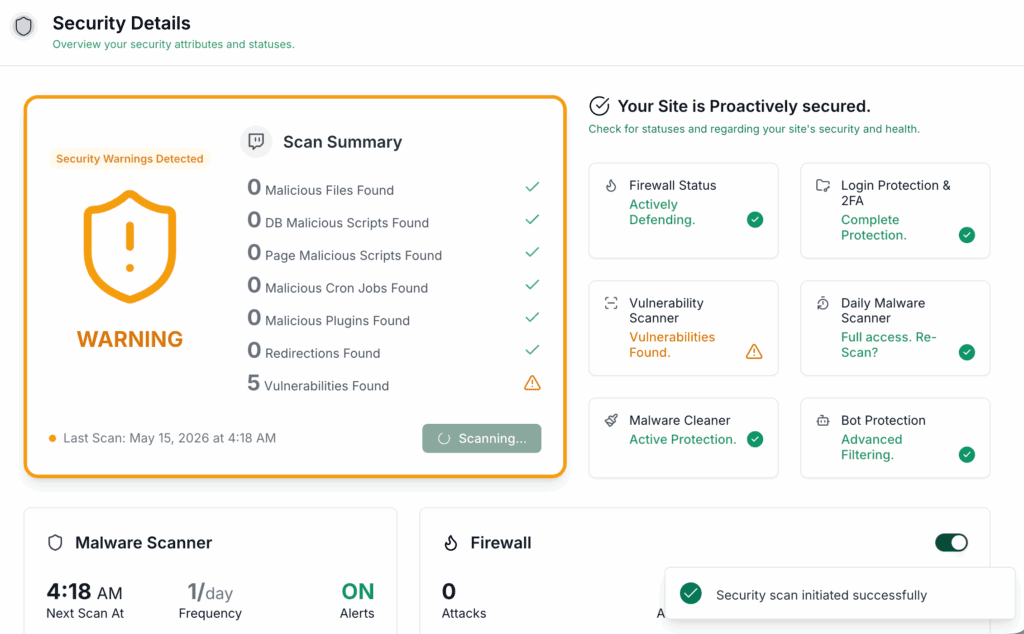
If your site was working normally and then images vanished without warning, especially if other parts of the site look strange too, run a full malware scan. A trusted security plugin can help here. MalCare is one option that can scan deeply and help with cleanup.
Do this early if the problem appeared out of nowhere. If malware is involved, changing random settings first can make the issue harder to trace.
3. Check if image files exist
Sometimes the cause is a missing or damaged file. WordPress may still show an image in the Media Library, but the real file may be gone from the server.
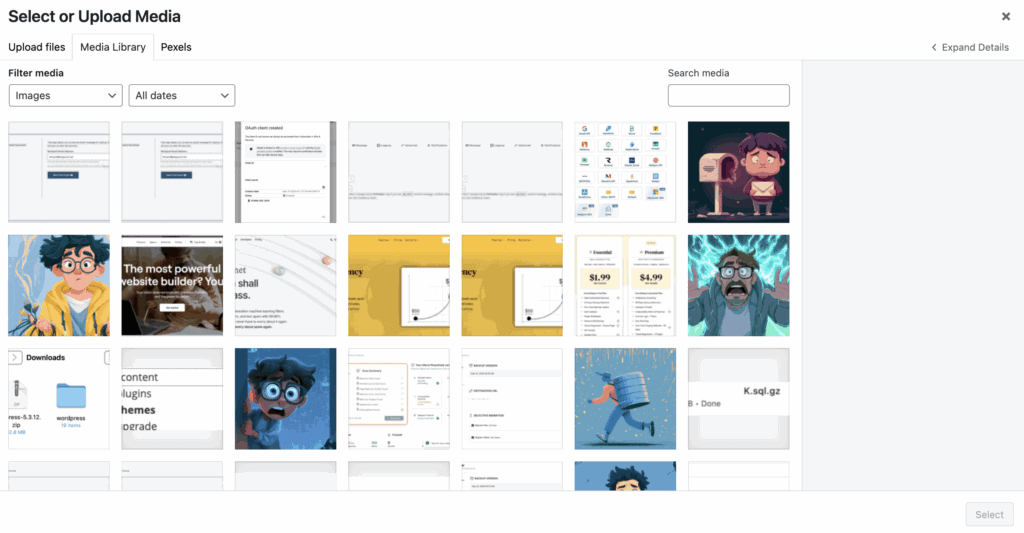
Open the Media Library and click one of the broken images. Then check your uploads folder, usually wp-content/uploads, to make sure the file is really there. You can also open the image URL directly in your browser.

These results give you useful clues:
- A 404 error usually means the file is missing or the image path is wrong.
- A 403 error often means the file is blocked from loading.
This problem often shows up after a migration, restore, failed upload, or manual file change.
4. Check file permissions
A common file issue that is preventing the images from loading is wrong file permissions. File permissions are rules that tell the server who can read or change a file. If these settings are wrong, your server may block image files even when they exist.
In most WordPress setups, folders should be 755 and files should be 644. These settings usually allow the server to read the files while keeping them protected.
This issue is more likely if images stopped loading after a manual file move, a migration, or a server change.
5. Update WordPress
Another common cause is software issues. A theme, plugin, or WordPress update can affect how images load. Sometimes the problem comes from outdated software. Other times, a newer update creates a conflict.
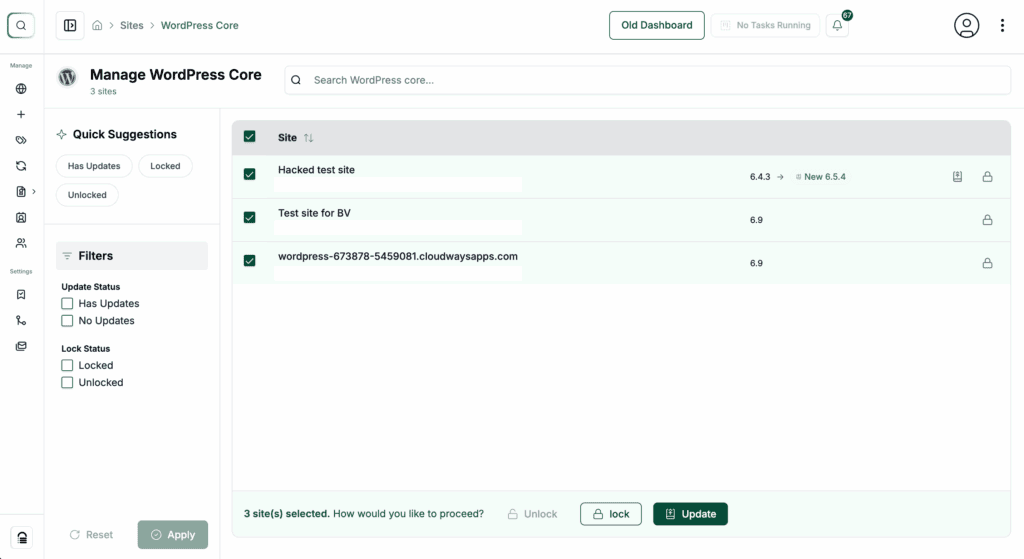
Check for updates to:
- WordPress core, which is the main WordPress software
- Your theme
- Your plugins
- Your PHP version
If your site is running old versions, image loading problems can appear because one part of the site is no longer working well with another.
6. Test for plugin and theme conflicts
If updates do not fix the issue, the next likely cause is a plugin conflict or theme conflict. A plugin conflict happens when one plugin, or a plugin and theme, interferes with another part of your site.
Switch to a default WordPress theme for a moment. Then disable plugins one at a time and test again after each change. If the images come back after turning off one plugin, you have probably found the issue.
The most common trouble spots are:
- Caching plugins
- Image optimization plugins, which reduce image file size or rewrite image paths
- Lazy load plugins
- Security plugins
- Sliders
- Page builders, which are drag-and-drop tools for building page layouts
7. Check for HTTPS and mixed content problems
Sometimes images are blocked because of mixed content issues. Mixed content means your page loads over HTTPS, but some image files still load over HTTP. HTTPS is the secure version of your site address. HTTP is the older non-secure version.
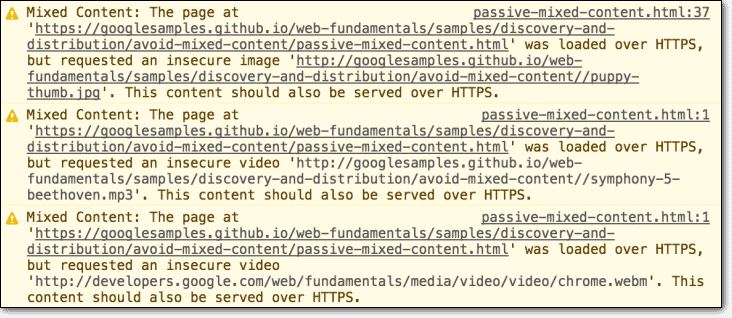
Open one broken image and inspect the URL. If it starts with http://, that is a strong clue. Make sure your WordPress Address and Site Address both use HTTPS. You may also need to update older image links stored in your database.
Plugins like Really Simple SSL can help. SSL is the technology that secures the connection between your site and visitors.
8. Check your CDN and image optimization settings
If your site uses a CDN or image optimization plugin, either one can break image loading. A CDN serves copies of your files from multiple servers, and image plugins may rewrite image URLs or create formats like WebP.
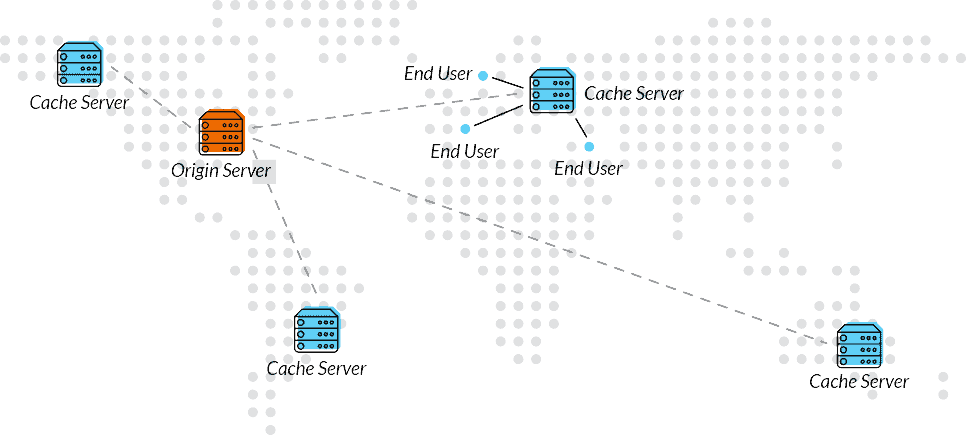
Check whether the image loads from the original server URL. If it does, but the CDN version does not, the problem is probably in your CDN setup.
This issue can happen if:
- CDN has an old cached version
- CDN cannot fetch the image from the main server
- Optimization plugin rewrote the image path badly
- WebP version was not created correctly
9. Turn off hotlink protection

Sometimes the cause is hotlink protection. Hotlink protection stops other sites from displaying your images directly from your server. It helps save bandwidth, but if the rules are too strict, it can also block your own domain.
Temporarily turn off hotlink protection and test the images again. If they load, review the rule and adjust it. This problem often appears after a domain change, a CDN setup, or a switch between www and non-www versions of your site address.
10. Disable lazy loading

A more specific cause is lazy loading, if images are blank or only fail in some sections. Lazy loading means images only load when a visitor scrolls near them. It helps page speed, but if it is not set up correctly, images may fail to appear in sliders, tabs, popups, page builder sections, or mobile layouts.
Turn off lazy loading in your performance plugin and test the page again. Also, check whether your theme or another plugin has its own lazy loading feature. Two lazy-loading systems can clash and create blank image spaces.
11. Check thumbnail generation and server limits
If the full-size image loads but smaller versions do not, the cause may be thumbnail generation or server resource limits.
If WordPress fails to create those smaller versions, some parts of the site may show broken images while the full image still exists.
Try regenerating thumbnails. Then check your:
- PHP memory limit, which is how much memory WordPress can use
- Disk space, which is the storage available on your hosting account
- Upload settings, which control how large a file you can upload
Also, check the file format. JPEG, PNG, GIF, and WebP usually work well. AVIF is another newer format, but it is not supported equally in all setups.
12. Check browser tools and server logs
If none of the steps above fix the problem, the cause may be clearer in your error details.
Look at the browser console, which is a built-in browser tool that shows loading errors. It can reveal mixed content warnings, blocked requests, or failed image paths. Then check your server error logs, which are records of errors on the server. These can show permission problems, memory issues, or file access errors.
Also test the page in another browser and without browser extensions. Sometimes the issue is local to one browser.
How to avoid the this error?
Once your images are back, a few small habits can help stop this from happening again.
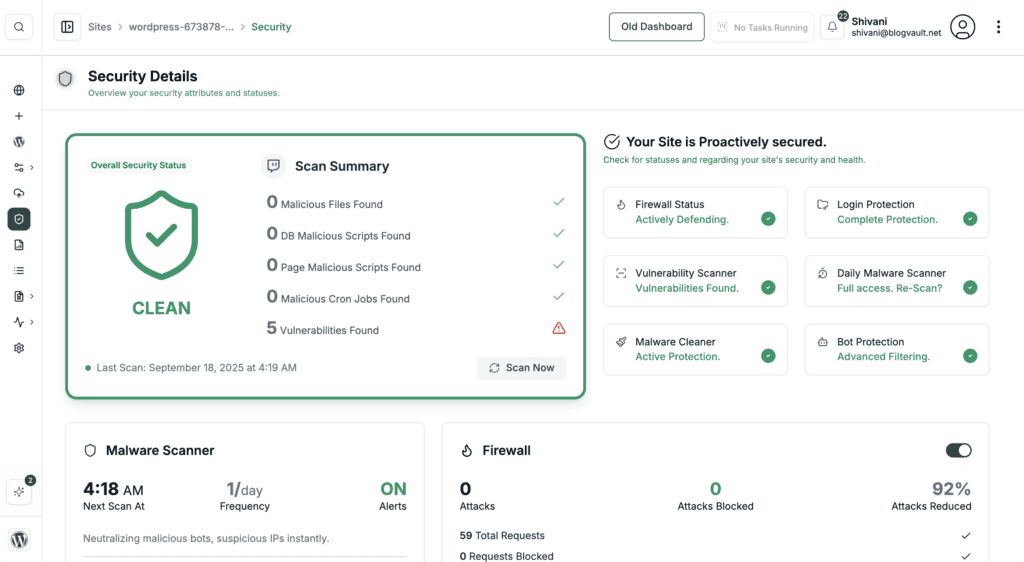
Use a security plugin: A security plugin can catch malware before it changes files, image links, or server rules.

Upload images with the WordPress tool: Use the normal WordPress uploader when you can. It keeps the file and the database entry in sync. Uploading by WordPress FTP can work, but it can also leave gaps. FTP is a way to move files to your server manually.
Use a reliable CDN: A good CDN can help image delivery and reduce server strain. Keep the setup simple. Too many caching and image tools can create conflicts.
Keep your software updated: Keep WordPress core, your theme, your plugins, and PHP updated. If your site is important to you, test updates on staging first.
Perform comprehensive site audits: A site audit is a review of your site’s setup, plugins, themes, settings, and performance. Remove tools you do not use. Overlap between plugins often causes avoidable problems.

Check server resource usage: Make sure your hosting plan has enough memory, storage, and processing power. This matters more on image-heavy sites or online stores.
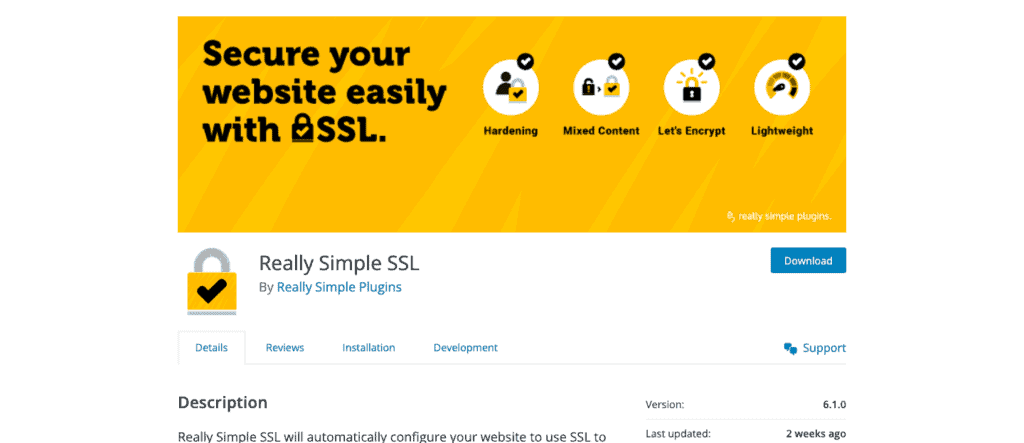
Configure SSL for HTTPS images: Keep your SSL certificate active and check image URLs after migrations or domain changes.
Parting thoughts
If WordPress images are not loading, the fix is often simpler than it first feels. The key is to stay calm and test one thing at a time. Most image problems come back to cache, plugin conflicts, mixed content, missing files, permissions, or CDN settings.
If the issue appeared suddenly, take that seriously. It may point to malware, a failed update, or a hosting problem. And before you change anything, make sure you have a backup you trust.
If you want a backup tool for that, BlogVault is worth considering. It creates automatic backups, stores them off-site, and gives you a recovery option if something goes wrong. That matters when you are troubleshooting under pressure.
FAQs
Why are my images not loading in WordPress?
Your images may not load because the files are missing, the permissions are wrong, or a cache is showing an older version of the page. It can also happen because of mixed content, plugin conflicts, lazy loading problems, CDN issues, hotlink protection, or malware.
Why is WordPress media not showing all images?
If some images are missing in the Media Library, they may not have uploaded properly, or the database may not match the uploads folder. If the Media Library shows them but the files do not open, the physical files may be missing or blocked.
Why is image upload not working in WordPress?
Uploads can fail because of file permission issues, unsupported file formats, low memory, low disk space, or hosting restrictions. Large image files can also fail if your upload limit is too low.
How do I clear the WordPress cache?
If you use a caching plugin, look for a button called Clear Cache, Delete Cache, or Purge Cache. You may also need to clear your host cache and CDN cache. To clear your browser cache, use Ctrl + Shift + Delete on Windows or Command + Shift + Delete on Mac and remove cached images and files.
Why are featured images not showing in WordPress?
This can happen if your theme is not outputting featured images in that template, if the image size failed to generate, or if lazy loading or caching is interfering. A plugin conflict can also cause it.
Why do images load in the Media Library but not on the live site?
That usually means the files exist, but something on the front end is blocking or rewriting them. Common causes include mixed content, CDN issues, theme conflicts, hotlink protection, or front-end cache problems.
Can a plugin cause WordPress images not to load?
Yes. Caching plugins, image optimization plugins, lazy load plugins, security plugins, sliders, and page builders can all cause this issue. If the problem started after you installed or updated a plugin, test that plugin first.

Shivani enjoys crafting guides that make every aspect of using WordPress simple and easy to follow. When she's not glued to her laptop, you can find her buried in a good book or occasionally, painting.


